
Dr. Wagner Okai, dental surgeon
Adults · plate ii
Adults

Pain, TMJ, bruxism, worn teeth.

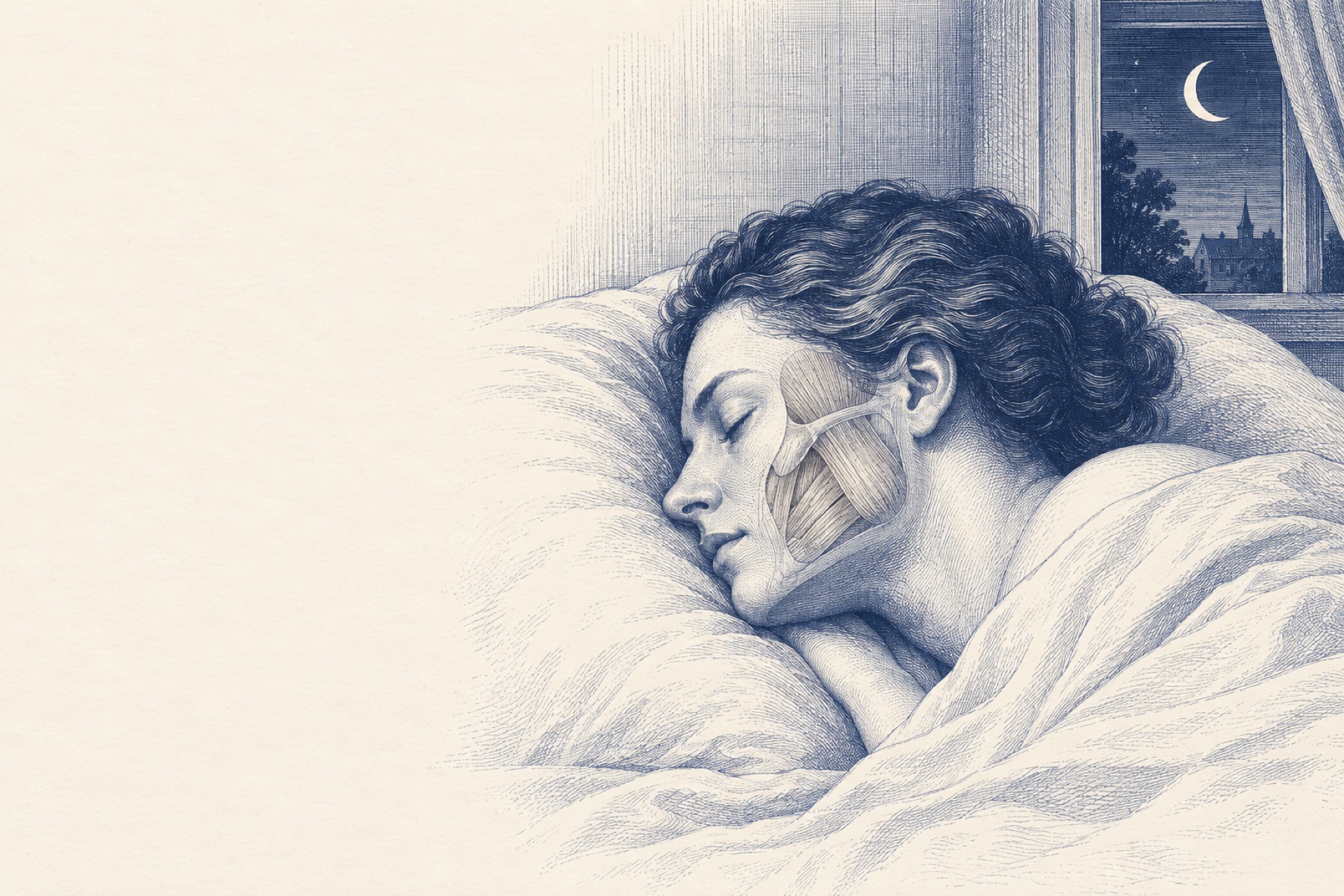
Waking up with a tired jaw? Pain in your temples? Teeth that look shorter? These signs may be related to the way your chewing works. They are worth talking about.

Bruxism

Grinding or clenching your teeth

Many people only find out because someone heard it at night, or because their dentist noticed the wear.

  • Worn, chipped, or sensitive teeth
  • A tired jaw when you wake up
  • Clenching your teeth when you concentrate

Wear is the sign that shows. Understanding what creates that force is what I look for at the evaluation.

TMJ

Jaw pain and clicking

The TMJ is the joint just in front of your ear. It works every time you talk, chew, or yawn.

  • Clicking when you open or close your mouth
  • Pain near the ear or in the jaw
  • Pain when chewing harder foods

When one side works harder than the other, the joint can feel it.

Head and neck

Headaches that keep coming back

The muscles that close your mouth reach up to your temples. Their tension may be related to frequent headaches, especially when you wake up.

  • Pain in the temples in the morning
  • A neck and shoulders that always feel tense
  • Tests that do not explain the pain
Habit

Chewing on one side only

It is one of the most common habits, and hardly anyone notices it. Over time, the side that works more and the side that works less adapt in different ways.

  • A clear preference for one side
  • Different wear on each side
  • A sense that the face is less symmetrical
In motion

What happens when you always chew on the same side.

Chewing on both sides, the effort is shared. Always on the same side, one muscle works harder, the jaw settles into it, and the balance gradually shifts.

Illustrative, simplified animation.

Animation: chewing on both sides, the forces balance out; always chewing on the same side, one muscle works harder and the jaw shifts

Chewing on both sides: the forces balance out

Videos

Videos on pain, bruxism, and posture

Short explanations I recorded about these signs.

Videos in Portuguese

What I evaluate

How you chew and on which side, how your teeth fit together, how the joint moves, muscle tension, and breathing. From there, I explain what I found and we talk about next steps, without rushing and without promises.

I see adults with pain and bruxism, as well as athletes. The first visit lasts 90 minutes or more; see what it involves.